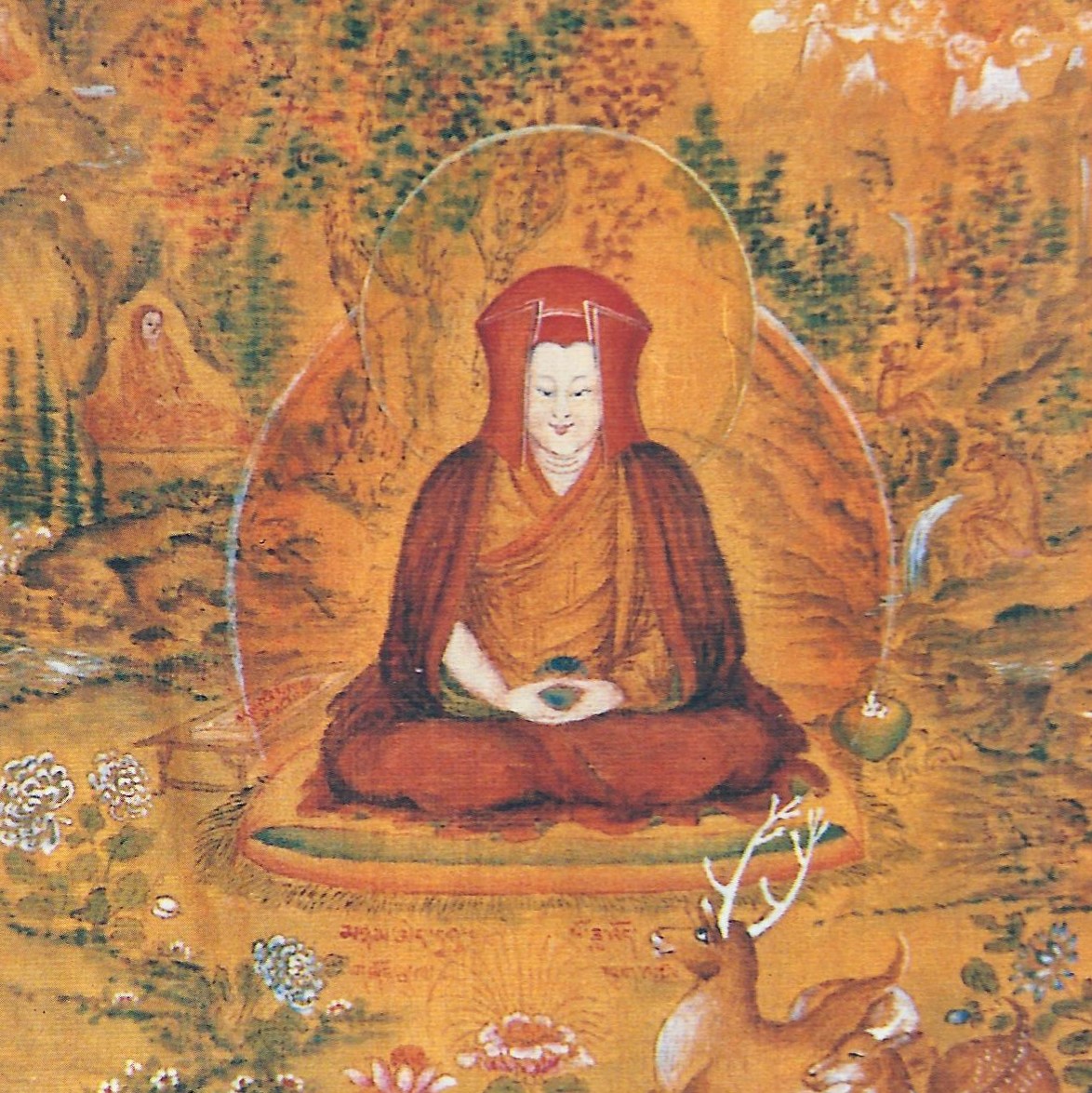
A Brief Explanation of the Four Dharmas of Gampopa (Part 5)
Please bless the minds of all beings to turn towards Dharma.
Please bless us that Dharma may become the actual path.
Please bless us that our path may be cleared of delusion.
Please bless us that delusion may arise as timeless wisdom.
Buddhism is included in view and conduct. The view is that of interdependent origination. The conduct is that of non-violence. If you have a good practice of interdependence, love, compassion, selflessness, and so on, your conduct will naturally become one of non-violence towards others. The reason is that this view is the antidote to delusions. If someone pretends to have high realization of the view but their conduct remains the same as before, committing the ten non-virtues, that is a sign that their mind has not turned towards Dharma.
It is very important that your body, speech, and mind all turn towards the Dharma, but it is most important that your mind does.
Again, as Buddha said,
Do not commit any non-virtue.
Persevere in perfect virtue.
Fully subdue your own mind.
This is the teaching of Buddha.
In the third line Buddha did not say that controlling your body or speech is the teaching of Buddha. He only said that bringing your mind under control is the most important thing; that is his teaching.
I would like to tell a brief story regarding this. In 2006 I opened a new Dharma center in Malaysia. I invited many guest Lamas and Abbots. One of my close friends who was an Abbot, half-jokingly said, “This Khenpo Karten is very smart and capable! He has opened Dharma centers everywhere! How many Dharma centers do you have?” I answered humbly, “I have a few.” Then I asked him, “How many Dharma centers do you have?’ Looking at me, he took a deep breath, placed his hand slowly over his heart, and said, “My Dharma center is right here!”
At that time, busy with ceremonial activities, I didn’t pay much attention. Later, as I thought about it, I felt that was a very rare instruction that I received from him. If you have a good practice of Dharma, the monasteries and Dharma centers are not outside yourself.
Excerpt of “A Brief Explanation of the Four Dharmas of Gampopa,” written by Khenpo Karten Rinpoche in 2014, presented on page 180 of his book Precious Teachings.
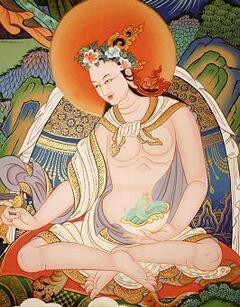
Image: The Ven. Gampopa, painting by Choegyal Rinpoche, used by permission