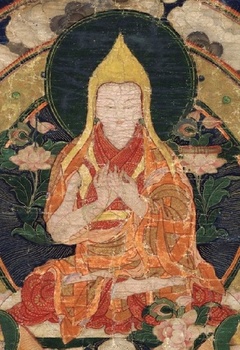
3) When we’ve attained this excellent basis, so difficult to find,
If we throw it away in meaningless, harmful conduct
We are trading gold for worthless rocks;
Don’t waste this life! That is my heart advice.
This verse instructs us not to waste our human life. Now, when they have managed to find such a human birth, just this once by the force of tremendous meritorious energy created in the past, there are some people these days who seem to look human, but act as if they are possessed by demons, committing acts that destroy themselves and others. For example, in the name of a nation state, brandishing nuclear weapons that could destroy the earth, terrorizing all the peoples of the world. Some misuse their power to seize the people’s wealth for themselves, and to oppress others. Those are really evil kinds of acts. Some people become a slave to wealth, indifferent to whether they create virtue or evil, thus wasting their human life. This is so foolish. Nagarjuna said, in his Letter to a Friend,
Compared to someone who uses
A jewel-studded golden vase to clean up vomit
Someone who, having been born human,
Uses it to create bad karma, is much more foolish.
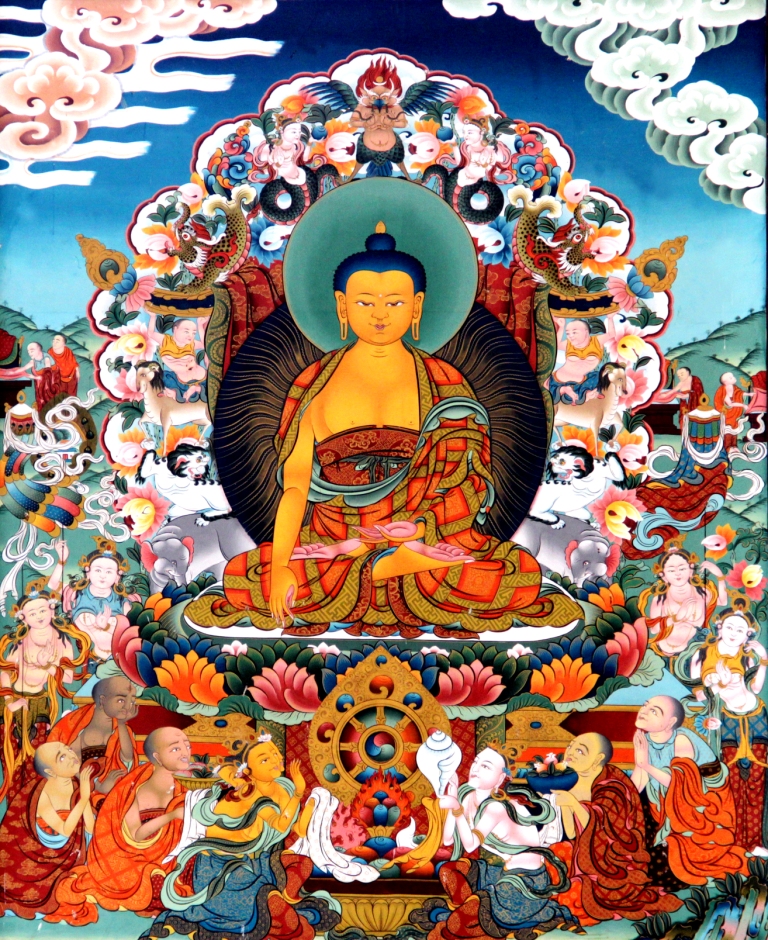
4) A son of the incomparable Shakyas said
If intentions are good, the path and destination will be good.
But if intentions are bad, the path and destination will be bad.
Call up good intentions! That is my heart advice.
This verse teaches the division between good and bad intentions. Generally speaking, in order to subdue sentient beings, Buddha taught eighty-four thousand collections of Dharma as the antidote to eighty-four thousand delusions. In brief, all Buddha’s teachings are taught solely as means to subdue your own mind. Developed by giving up harm to others along with its basis, and practicing benefit to others along with its basis, having a good intention to benefit others is really the essence of Buddha’s teachings. If you have the good intention in your mind to benefit others, even if you don’t call yourself a Buddhist, that is the real meaning of being a Buddhist. The ultimate altruistic intention is bodhicitta, and whoever has it is called a Bodhisattva. A Bodhisattva is not necessarily a person separate from yourself who looks like a Deity with different garments and ornaments! A Bodhisattva is someone who regards a self-important attitude as faulty and an attitude that cherishes others as full of good qualities, and has a compassionate attitude concerned with nothing but the welfare of aged mother sentient beings. Someone with this attitude, regardless of their name or clothing, is a Bodhisattva in actuality. Someone who conceals a negative attitude and harbors ill-will, no matter what their title or clothing, has already expelled themselves from the ranks of Buddhists. Buddha said,
My Dharma system is not one of harm to others.
A person who harms others is not a follower of mine.
I am not their teacher.